How to Drop Shot for Bass
How I rig and fish a drop shot: 3/8 oz weight, nose-hooked worm, leader length from 6 inches to 2 feet, and why I let it sit before I move it.
The short answer
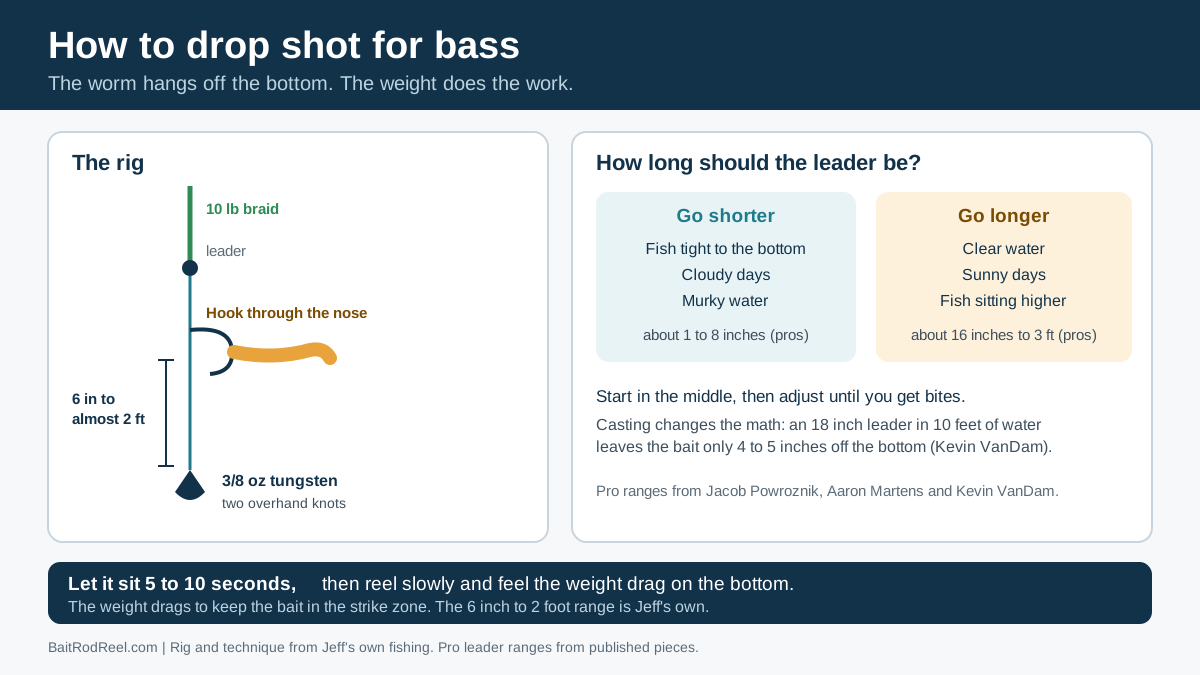
A drop shot keeps your worm hovering off the bottom on a tag end above the weight. I use a 3/8 oz tungsten weight, a small hook through the nose of the worm, and a leader from about 6 inches to almost 2 feet depending on water clarity and where fish show on my finder. Cast it, let it sit on the bottom for five to ten seconds, then work it slowly so the weight drags and keeps the bait in the strike zone.
A drop shot is one of the best finesse presentations in my box, and it is easy to learn. The worm hangs above the bottom on its own line while the weight sits on the bottom, so it looks like a baitfish hovering in place. Here is how I rig and fish it.
What you need
- A drop shot hook. I use a smaller hook and only hook the nose of the worm.
- A weight. I use a 3/8 oz tungsten weight.
- Braid with a fluorocarbon leader. I use 10 lb braid and 10 lb Berkley Vanish.
- A spinning rod and reel. I use a spinning setup for drop shotting, because spinning gear handles light lures without the problems I run into on a baitcaster. My exact combo is in my finesse spinning combo guide.
Check that the weight page has the 3/8 oz size selected, and that the braid page has the 10 lb low-vis green option selected.
Weight size
I use 3/8 oz. Pros land in the same range. Jacob Powroznik says 3/8 and 1/2 oz are his go-to sizes, dropping to 1/4 oz on shallower water. Aaron Martens described 3/16 oz as his standard, going down to 1/16 or 1/8 oz when the water is clear and calm, and up to 1/4 oz when conditions are tougher.
How far above the weight?
The length of line between the hook and the weight decides how high off the bottom the worm sits. I go anywhere from six inches to almost two feet. What I choose depends on conditions, water clarity and where the fish are showing on my finder.
That matches what pros say:
- Jacob Powroznik goes longer, about 16 to 18 inches, on sunny days when fish sit higher, and shortens to about 6 to 8 inches on cloudy days when fish stay near the bottom.
- Aaron Martens starts around 8 to 10 inches. He goes as short as 1 to 2 inches in murky water, and 2 to 3 feet in very clear water.
- Kevin VanDam, in his Bassmaster column, says to set the length by depth, cover and clarity. He also points out that when you cast a drop shot, the line angle means a long leader sits lower than you would think. An 18 inch leader in 10 feet of water only leaves the bait about 4 to 5 inches off the bottom.
So the rule of thumb is simple: shorter when the fish are tight to the bottom or the water is murky, and longer when the water is clear or the fish are sitting higher. Start somewhere in the middle and change it until you get bites.
How I rig it
- Tie the hook on the line, and tie the weight on at the bottom with only two overhand knots. If the weight gets stuck and I cannot free it, I can break the line at the weight and tie on a new weight, instead of losing the whole rig.
- Hook the worm through the nose, with a smaller hook.
- Bend the barb smooth. I have struggled with gut hooking bass, and keeping the barb bent smooth gives me much better success saving the fish without hurting it. I recommend this to any angler, especially newer ones, who are more likely to let a fish swallow the worm before setting the hook.
How I fish it
I fish a drop shot almost exactly like a wacky rig or a Texas rig. The cast and the retrieve are the same. Two things are different:
Let it sit longer. I wait a good five to ten seconds on the bottom before I move the bait. The goal is for the worm to look suspended off the bottom like a baitfish, so keeping it in one spot a little longer makes sense.
Slow reel it back in. I reel slowly so I can feel the weight drag across the bottom. That keeps the bait in the strike zone longer, and what I feel through the weight tells me a lot about what is on the bottom.
Where I fish it
On and around structure, wherever fish may be holding, and I watch my finder to see where they are showing so I can adjust the leader. You can see the rest of my box in my guide to the best bass lures for New England lakes.
Quick recap
- 3/8 oz tungsten weight, small hook through the nose of the worm.
- Leader from about 6 inches to 2 feet: shorter near the bottom or in murky water, longer in clear water.
- Let it sit five to ten seconds, then reel in slowly and feel the weight drag.
- Two overhand knots on the weight, so a snag costs a weight and not the whole rig.
- Bend the barb smooth to protect the fish.
The rig, the leader range, the sit time and the retrieve are from my own fishing. The comparison with pro opinions comes from published pieces by Jacob Powroznik (Wired2Fish and Bassmaster), Aaron Martens (FLW) and Kevin VanDam (Bassmaster).
Frequently asked questions
What is a drop shot rig?
A rig with the hook tied above the weight, so the worm hangs off the bottom like a baitfish while the weight stays on the bottom. It is one of my favorite finesse presentations.
How far above the weight should the hook be?
In my case anywhere from six inches to almost two feet, depending on conditions, water clarity and where fish are showing on my finder. Pros back up the same idea: shorter when fish are tight to the bottom or the water is murky, and longer in clear water and sunny conditions.
What size weight should I use for drop shotting?
I use a 3/8 oz tungsten weight. Pros range from 1/16 oz in calm, clear conditions to 1/2 oz, with 3/16 oz to 3/8 oz as common go-to sizes.
How do you hook a worm on a drop shot?
I use a smaller hook and only hook the nose of the worm. That keeps the worm hanging naturally and moving.
How long do you let a drop shot sit?
About five to ten seconds before I move the bait. The goal is to make the worm look suspended off the bottom like a baitfish.
How do you keep from losing the whole rig when the weight snags?
I tie only two overhand knots on the weight. If it gets stuck and I cannot free it, I break the line at the weight and tie on a new weight instead of losing the whole rig.
Should I bend the barb down on a drop shot hook?
I do. I struggled with gut hooking bass, and keeping the barb bent smooth helps me save the fish without hurting it. I recommend it to everyone, especially newer anglers.